

Automated file transfer scheduling with SFTPPlus MFT
Run SFTPPlus MFT transfers during daily, weekly, or monthly windows, including the last or second-last day of the month. Keep partner deliveries on schedule with file monitoring, retries, and audit logs.

- Updated
- 2026-10-21
SFTPPlus MFT schedules automated file transfers between local and remote locations, including SFTP and FTPS servers and SharePoint Online. Set a daily, weekly, or monthly active window for each transfer. SFTPPlus checks its source and exchanges files only while that window is active. This lets you follow a partner's receiving hours or collect a report on a particular day without running the transfer around the clock.
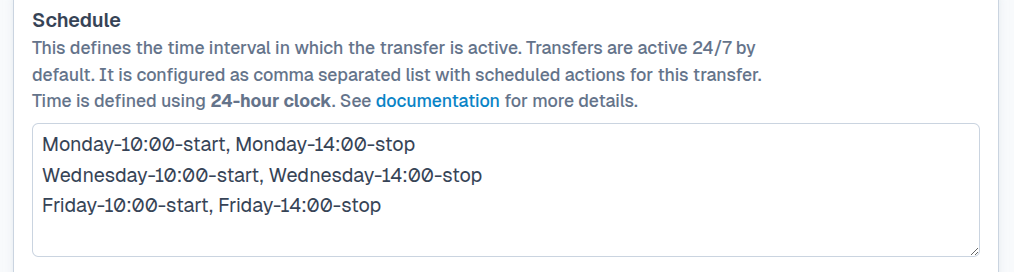
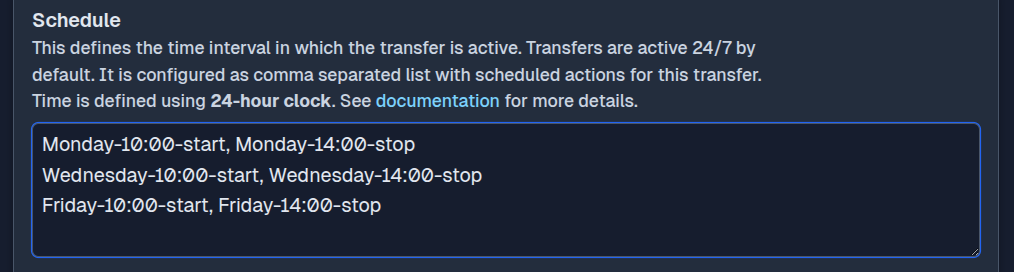
Send daily files during a partner's working hours
Suppose your organization generates files for a partner's SAP ERP system every weekday. The partner accepts deliveries only from 9:00 AM to 5:00 PM.
You can configure a weekly schedule that starts the transfer at 9:00 AM and stops it at 5:00 PM from Monday through Friday. Files generated outside that window remain at the source until the next scheduled active period. This respects the partner's receiving hours without requiring an external scheduling service.
Collect a weekly report without polling every day
A partner publishes a report every Monday at 10:00 AM, but the exact delivery time can vary. Configure the transfer to run on Mondays from 10:00 AM to 1:00 PM.
SFTPPlus checks for the report during that window and can process a late arrival without connecting to the partner on every other day of the week.
Publish a monthly sales report to SharePoint
Your sales teams prepare reports in several source folders, and the consolidated report is published on the first day of each month. A monthly schedule can activate the transfer on that day, collect the available files, and publish them to SharePoint Online.
The transfer remains stopped for the rest of the month, when there is no report to process. For a delivery at the end of the month, choose a numbered day from the 28th through the 31st, or choose the last or second-last calendar day. The last calendar day option follows the length of each month, including February in a leap year. If a numbered day does not occur in a month, SFTPPlus skips that month's scheduled window for that day. For example, a transfer scheduled for the 31st does not run on the 30th in a shorter month.
Choose the schedule that matches the exchange
SFTPPlus MFT supports three scheduling intervals:
- A daily schedule defines one or more active windows that repeat every day.
- A weekly schedule defines start and stop times for selected weekdays.
- A monthly schedule defines active windows for selected days of the month, including the 28th through the 31st, or for the last or second-last day.
Limiting a transfer to the required window avoids unnecessary connections and source folder checks. It also makes activity easier to align with partner availability and operational service levels.
Why use SFTPPlus MFT for scheduled transfers
The schedule controls the same transfer that monitors files, connects to the destination, retries failed deliveries according to its settings, and records the result in the audit log. Your team can manage delivery times and transfer behavior in one workflow, instead of maintaining a scheduler and a separate file transfer script. See transfer resilience for the retry and recovery options that work alongside scheduling.
See the transfer scheduling documentation for configuration examples and the available scheduling rules.
Get help with a scheduled transfer
If you need help designing a schedule around a partner's availability or a reporting workflow, contact the SFTPPlus MFT support team. You can also request a trial to test a scheduled transfer with your own files and partner endpoint.