
SFTP Load Balancer
You can use SFTPPlus to deploy a SFTP server with any TCP network load balancer, including cloud or on-premise deployments.
Continue reading


Stay informed with product updates, company news, and insights on how to optimize and secure your file transfers.
You can use SFTPPlus to deploy a SFTP server with any TCP network load balancer, including cloud or on-premise deployments.

Use SFTPPlus MFT to implement high availability FTP client transfers, with configuration and audit logs automatically distributed inside the cluster.

SFTPPlus supports load balancer deployment, including FTP passive mode handling and automatic configuration synchronization.
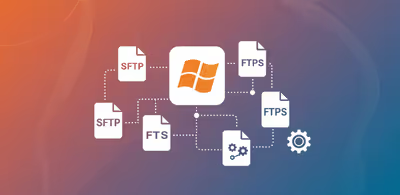
SFTPPlus MFT can be used to integrate your on-premise application with files received as Exchange Online / Office 365 attachments, allowing them to be accessed via an FTP or SFTP server.
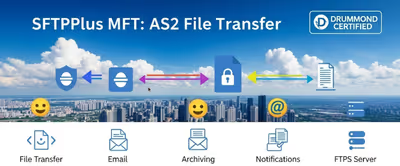
In this article, we highlight the protocols supported by SFTPPlus MFT, categorized by server-side and client-side roles.

Use SFTPPlus MFT to manage and automate your file transfers within your organization, or between your organization and your trading partners.

Use SFTPPlus MFT to connect existing SFTP workflows to AS2 trading partners. Users keep their familiar tools while SFTPPlus handles AS2 messages and receipts.

Automate Exchange Online attachment delivery with support for SFTP or FTPS, or move attachments to Azure BLOB or other cloud storage solutions.
Block access to your FTP / SFTP / HTTPS server or administration services based on simple username rules. This reduces the load and cost associated with operating your authentication server.

Schedule SFTPPlus MFT transfers for specific hours, weekdays, or days of the month, so partner exchanges run only when needed.

SFTPPlus MFT offers seamless integration with Google Identity to implement Single Sign-On (SSO) - not only for end-user file transfer operations but also for administrative access to the platform.
This article explores how SFTPPlus MFT software enables organizations to automatically monitor local or remote files and securely send them as email, streamlining file distribution and enhancing operational efficiency.